
Tempe · Shared and high-use doors
Heavy-Duty Garage Door Opener Repair In Tempe
If four households use one door, your opener is doing a small commercial workload on residential parts, and it is wearing out in a predictable order.
Above All Garage Door Service repairs and upgrades high-use garage door operators across Tempe, including shared and multi-family garages where one door carries thirty or forty cycles a day. We rate the replacement against your actual cycle count. Arizona ROC338265. Call (480) 405-0909.
- 5.0 stars from 49 Google reviews
- AZ ROC licensed and insured, license ROC338265
- Written price before anything is touched
- Nate C. wrote this
Four households, one door, forty openings a day
A single-family garage in Gilbert runs four to six openings a day. A shared garage behind a Tempe fourplex, or a tandem bay serving two rented units, runs eight to twelve per household. Do the multiplication and the same door and the same motor are doing eight times the work for the same money.
Nothing about the hardware changes when that happens. The operator is still a residential unit, the springs are still whatever the builder specified for a family home, and the rollers are still the plastic ones that came in the box. The workload is the only variable that moved, and it moved by a factor of eight.
That is why shared Tempe garages produce opener failures at three and four years that look premature to the owner and look exactly on schedule to us. The unit did not fail early. It reached its design life early.
In a shared garage, nobody owns the symptom
The part that makes these doors expensive is not mechanical. In a single-family home, one person hears the new grinding noise on Monday and calls on Wednesday. In a shared garage four people each hear it once, each assume somebody else has mentioned it, and the first call happens when the door stops entirely, usually with a car behind it.
So the fix for a shared door is partly procedural. We ask landlords to put one name and number on a card by the control, and we leave a sticker with the date of the last service and what we found. It costs nothing and it converts a 140 dollar roller job into something that happens before the cable comes off the drum.
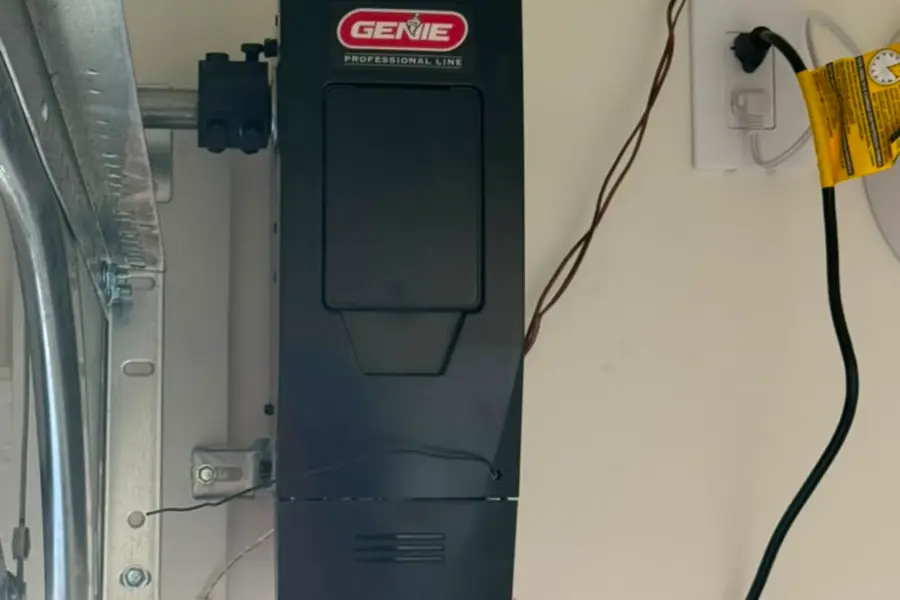
A wall-mounted operator helps for a related reason. In a shared garage the ceiling is storage, and a ceiling-mounted unit collects knocks from roof boxes, ladders and bikes going past on the way to the rafters. Moving the motor to the wall beside the shaft takes it out of that traffic entirely.
What wears out first, in the order it happens
Safety sensors go first, and not because they fail. They sit six inches off the floor in a space where bikes, bins and boxes get parked, and a knock of a few millimetres is enough to make the door refuse to close and reverse. On shared doors this is our most common callout by a wide margin.
Then rollers. Plastic builder rollers at forty cycles a day are consumables, and once they flat-spot the door drags, which makes the operator work harder and look like the problem. Then the drive gear inside the opener head, which is the plastic part that absorbs that extra load. Then the springs, which arrive at their cycle limit years ahead of the owner expectation.
Upgrading in that same order is what makes a shared door cheap to run. Steel-bearing rollers, a sensor mount that cannot be knocked, a high-cycle spring set, and only then a question about the operator. Most shared doors we are called to do not need a new opener at all.
Specifying a replacement for a high-use Tempe door
When the operator genuinely is finished, the figure to ask for is the cycle or duty rating in the installation manual, matched against your actual daily count. A unit rated for light residential use fitted to a forty-cycle door is the same mistake again with a new warranty on it.
On shared doors we also specify a separate manual lock-out or keypad rather than handing out six remotes, a battery backup so a power cut does not trap four cars, and a sensor bracket that is bolted rather than clipped. None of those are expensive and all three show up in how often we come back.
Service call 35 dollars with the findings written down, spring work 180 to 290 dollars by size and cycle rating, and a quote that names parts, labour and warranty before anything is touched. Arizona ROC338265, working valley doors since 2012, Nate C. on the phone.
Asked by Tempe landlords and shared-garage households
High-use doors, shared garages and what wears first
How long should a garage door opener last in a shared garage?
A residential opener rated for a family home will typically reach its design life in three to five years on a door shared by three or four households, because it is doing roughly eight times the daily cycles. That is normal wear, not a defect.
Why does our shared garage door keep reversing before it closes?
Nine times out of ten a safety sensor has been nudged out of alignment by something parked or stacked near it. In shared garages the sensors live in the busiest few inches of floor space. A bolted bracket instead of a clip usually ends the problem for good.
What should a landlord upgrade first on a high-use garage door?
Rollers to steel-bearing, then a sensor mount that cannot be knocked, then a high-cycle spring set. Those three address the parts that actually wear at high cycle counts and often remove the apparent need for a new operator altogether.
Do you work with landlords and HOAs on multi-family garages in Tempe?
Yes, regularly. We will put a service date and finding sticker by the control, send an itemised invoice suitable for a maintenance file, and quote recurring parts separately so the recurring cost is visible rather than buried.
Can you fit a wall-mounted opener instead of a ceiling unit?
In most shared garages, yes. A wall-mounted operator drives the torsion shaft from the side, which keeps the motor and wiring clear of stored bikes, roof boxes and ladders, and frees the ceiling for the storage it is already being used for.
Count the households, then call
Tell us how many vehicles use the door and roughly how many times a day it runs. That number sets the specification, and it is the one piece of information most quotes never ask for.