
Guide
The Sensors Are Blinking and the Door Will Not Close
A blinking sensor light and a door that reverses is nearly always the photo eyes. How to read the lights, realign them, and when it is actually a fault.
If the door goes down a foot and comes back up, and a small light near the floor is blinking, the two safety sensors have lost sight of each other. Most of the time it is alignment, a dirty lens or low sun straight into the receiver, and it is fixable in ten minutes without tools.
- 5 stars on Google
- AZ ROC licensed and insured, license ROC338265
- Upfront price before we start
- Nate C. wrote this
What The Two Lights Mean
There is a sensor on each side of the door about six inches off the floor. One sends an infrared beam, the other receives it. Each has an LED.
- Both steady: the beam is good. Your problem is somewhere else.
- The receiving side blinking or out: the beam is broken or misaligned. This is the common case.
- The sending side out entirely: no power to that sensor, usually a broken or stapled through wire.
Most openers also flash the light on the motor head a set number of times as a code. On LiftMaster and Chamberlain units, ten flashes is the sensor circuit. Count the flashes before you assume.
Low sun straight into the lens
This is an Arizona speciality and it catches people out because the door works perfectly all day and refuses to close at six in the evening. A west facing garage with the sun low in the doorway floods the receiver with infrared and it cannot pick its own beam out of it. Shade the receiving sensor with your hand: if the door then closes, that is your answer, and a small hood or a slight rotation away from the opening fixes it.
Dust on the lens
Fine desert dust builds a film that you can barely see. Wipe both lenses with a dry soft cloth, not a wet one and not a solvent.
A knocked bracket
A bike, a bin, a vacuum, a foot. The brackets are thin and they move. Both sensors have to point at each other within a couple of degrees. Loosen the bracket, aim it at its partner until the receiving light goes solid, tighten it.
A cobweb or a leaf
Enough to break the beam, and easy to miss because it is at ankle height.
A wire pulled loose
The bell wire from each sensor runs up to the motor head and it is usually stapled to the wall. Staples cut through insulation over the years, and a wire pinched behind a shelf bracket does the same. If one sensor has no light at all, this is where to look.
How To Realign Them Properly
- Loosen the bracket on the receiving sensor, the one with the blinking light.
- Move it slowly until the light goes steady, then hold it there.
- Measure the height of both sensors off the floor. They should match within half an inch, and both should sit six inches or lower, which is where the code requires them.
- Tighten the bracket without pushing it out of aim, then run the door twice.
- Test the reversal properly: lay a two by four flat in the doorway and close the door onto it. It must stop and reverse.
What You Should Not Do
Do not bypass the sensors, and do not twist the wires together to make the opener think the beam is clear. Those sensors are the reason a door stops instead of closing on a child or a pet, they have been required on residential openers in the United States since 1993, and disabling them makes the door a hazard and the house a liability. If holding the wall button is the only way you can close your door, treat that as a temporary measure and get it fixed.
When It Is Not The Sensors
If both lights are steady and the door still reverses, the down force or the close limit is set wrong, so the opener thinks it has hit something before it reaches the floor. If the door reverses immediately with a grinding sound, look at the rollers and the track. If it slams down fast and then bounces up, that is a spring and balance problem, not a sensor problem.
A sensor and alignment visit is done as part of the 100 dollar tune up, which covers the full 21 point service rather than just the one fault. A logic board, if that is what has failed, depends on the opener model and gets quoted on the phone.
Answers
Questions People Ask About This
Why does my garage door close fine in the morning but not in the evening?
Low sun shining directly into the receiving sensor. The infrared from the sun swamps the beam. Shading that sensor with your hand to test it will confirm it, and a small hood or a slight change of angle fixes it.
What does it mean when the garage door sensor light is blinking?
The receiver cannot see the beam from the sender. Usually misalignment, a dirty lens, an obstruction at ankle height, or a damaged wire.
Can I disconnect the safety sensors?
No. They are required on residential openers in the United States and they are the reason a closing door stops for a child or a pet. Bypassing them makes the door unsafe and uninsurable.
How much does it cost to fix garage door sensors?
Alignment is part of the 100 dollar tune up, which covers the whole door rather than the single fault. If a sensor or a wire has actually failed, the part is quoted on the phone first.
If You Would Rather We Just Looked At It
This is what we do all day. Every job is priced on the price list, the service call is 35 dollars and it comes off the price if the work goes ahead, and you get the exact number on the phone before anyone is booked.
More guides
Other Things Worth Knowing
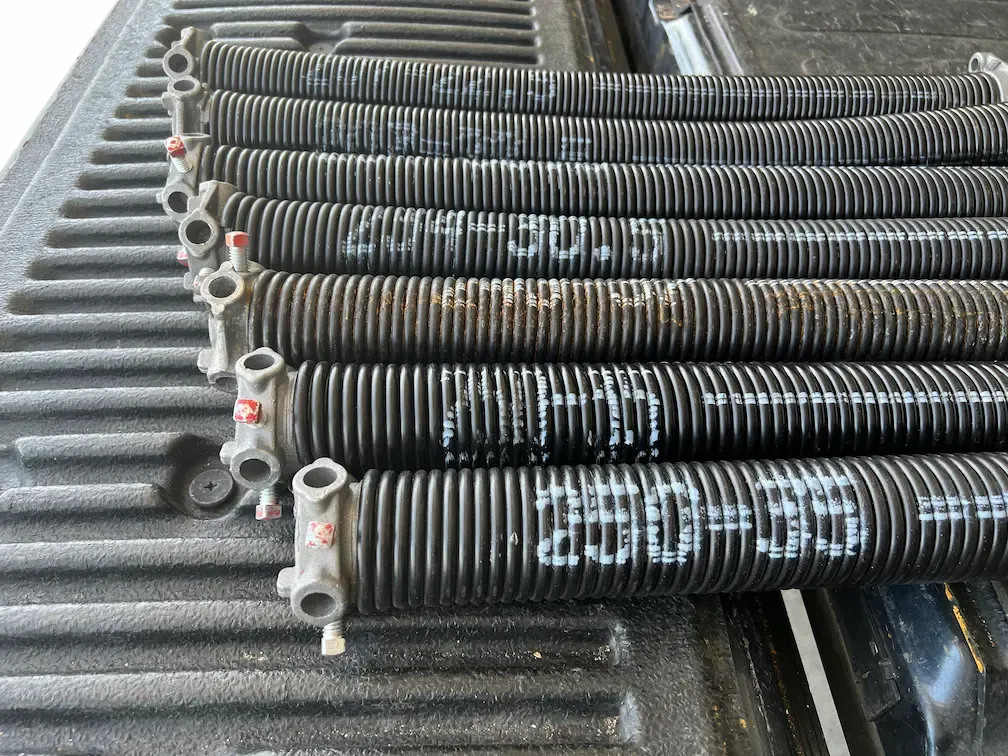
Spring Cycles, and Why Arizona Is Hard on a Standard Spring
What a spring cycle is, why builder springs fail after about seven years in the Valley, and what high cycle springs cost
Read it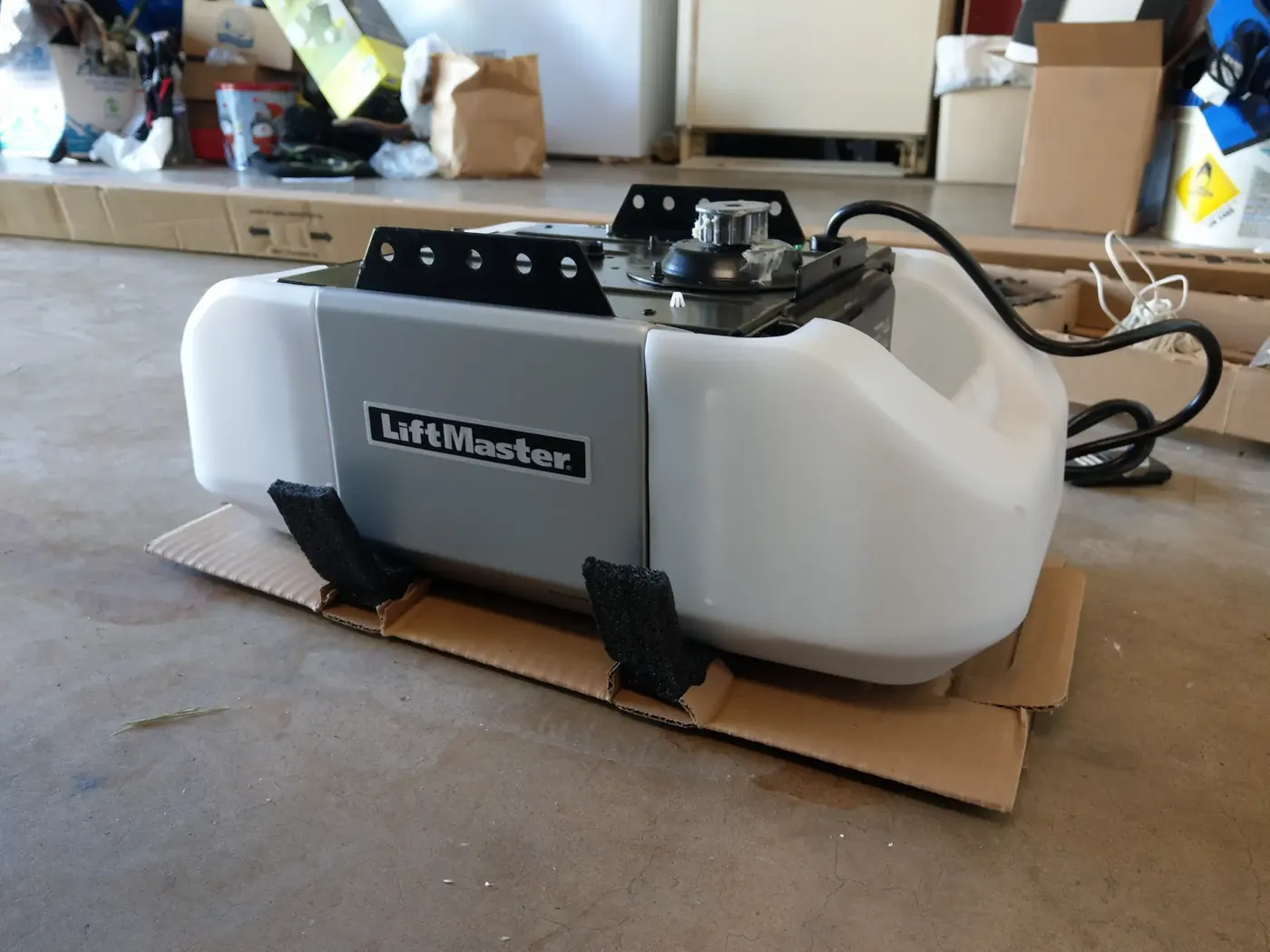
Belt Drive or Chain Drive, and When the Quiet Is Worth Paying For
The real difference between a belt drive and a chain drive garage door opener, what each is good for, and what a fitted
Read it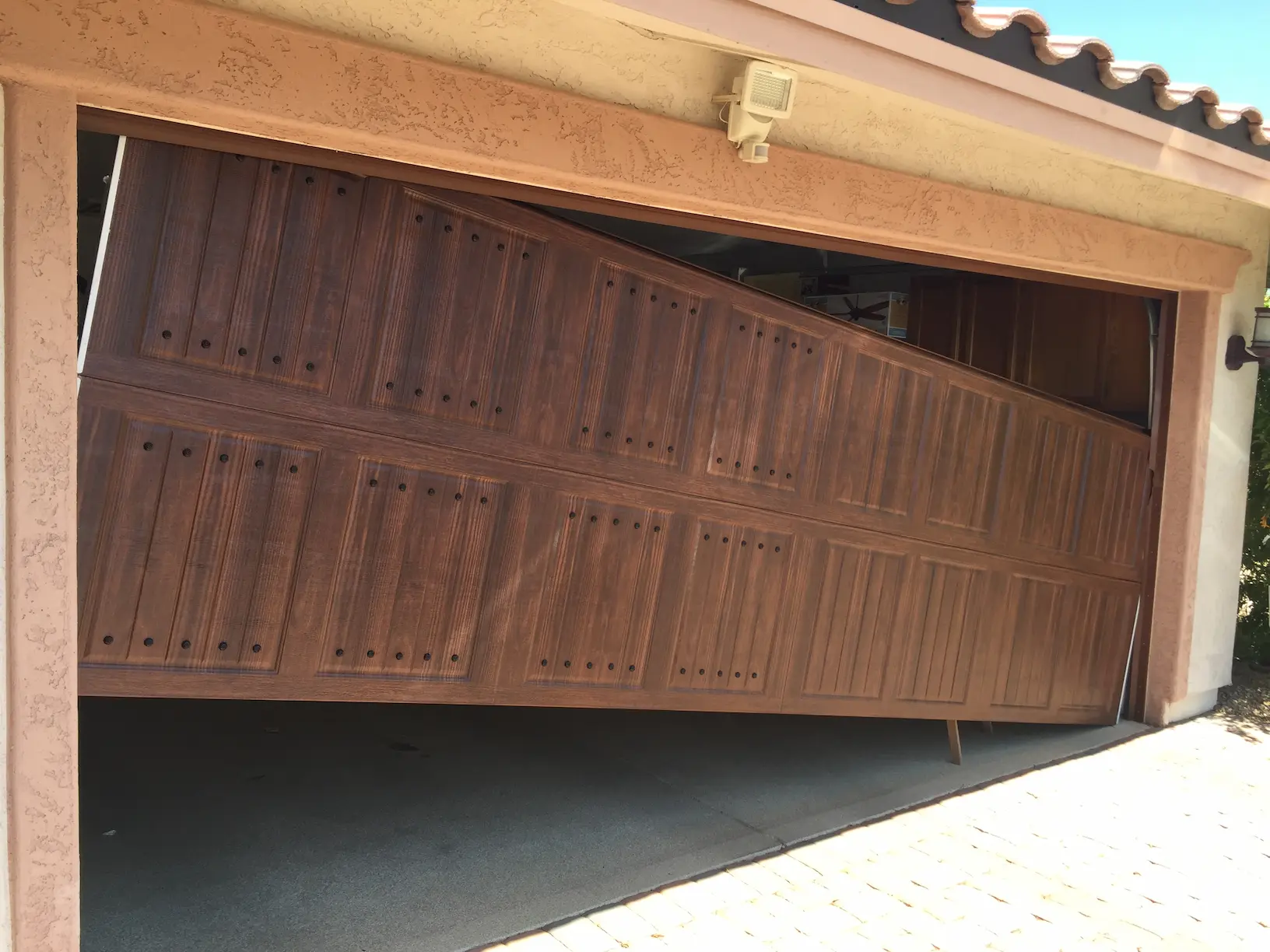
Your Door Is Off Its Track. Read This Before You Touch It
What to do, and what not to do, when a garage door comes off its track. Written by the Scottsdale company that puts them
Read it