
Guide
The Door Is Under a Bedroom and It Wakes the House
What actually makes a garage door loud, in order: rollers, then the opener drive, then loose hardware. What to change and what makes no difference.
Almost all of the noise from a garage door comes from steel rollers running in a steel track, and that is the cheapest part to change. Sealed bearing nylon rollers for a whole door are 249 dollars and they take most of the sound out. The opener drive type is the second biggest factor, and loose hardware is the third.
- 5 stars on Google
- AZ ROC licensed and insured, license ROC338265
- Upfront price before we start
- Nate C. wrote this
Work Out Which Noise You Have
- A rumble or a rolling roar the whole way: rollers.
- A rhythmic clack or a slap: a chain drive, or a flat spot on one roller.
- A bang at the start and the end: hinges and loose hardware taking up slack.
- A squeal or a screech: dry bearings, either the rollers or the ends of the torsion bar.
- A grinding whirr from the motor head with the door barely moving: the opener gear, and that is a fault rather than a noise problem.
- A pop or a twang from up near the ceiling: the spring, and worth a look before anything else.
1. Rollers, Which Is Most Of It
Builder grade doors ship with steel rollers on unsealed bearings, sometimes with no bearings at all. Steel on steel transmits every irregularity in the track straight into the frame of the house, and the frame is what your bedroom floor is attached to. Once a roller stops turning it stops rolling and starts dragging, which is louder again.
Sealed bearing nylon rollers replace the whole set at 249 dollars for the door. Nylon is quieter than steel by a wide margin, the sealed bearing keeps desert dust out, and there are typically ten to twelve rollers on a double door. This is the single change that makes the most difference for the least money.
2. The Opener Drive
A chain drive is a steel chain running over a steel sprocket and it is the loudest of the three types. A belt drive uses a reinforced rubber belt and is noticeably quieter. A wall mounted unit takes the motor off the ceiling entirely, which matters when the ceiling is a bedroom floor.
A Chamberlain belt drive supplied and fitted with two remotes and a camera is 689 dollars. A wall mount starts at 1,350 dollars by model. If the door is directly under a bedroom and the opener is a twenty year old chain drive, this is the second thing worth doing after the rollers.
3. Hardware That Has Worked Loose
A door cycles a few thousand times a year and every cycle shakes every bolt. Hinges loosen, the track brackets loosen, and the lag bolts holding the vertical track to the jamb loosen. A loose hinge lets the panel move independently, which is the bang you hear as the door changes direction. Tightening everything to spec and replacing worn hinges at 125 dollars each takes out the impact sounds.
Two things worth knowing here. Do not overtighten hinge bolts into thin steel, because a stripped hole is worse than a loose one. And never touch the bolts on the bottom brackets at the corners of the door, because those are attached to the cables and they are under spring tension.
4. Lubrication, Which Helps And Is Not A Fix
A dry door is a loud door. The right lubricant is a garage door specific silicone or lithium spray on the hinges, the roller stems, the spring and the bearing plates. Not WD40, which is a solvent and cleans the grease off. Not grease on the track, because the rollers are supposed to roll along it, not slide, and grease on a track collects dust until it becomes a paste.
Lubrication buys quiet for a few months. If the door goes loud again quickly, the parts are worn rather than dry.
What Makes No Difference
- An insulated door. Insulation is about heat, and a heavier door can be louder rather than quieter.
- Rubber pads under the track brackets, once the rollers are nylon. The transmission path is already broken.
- A new opener while the rollers are still steel. You will have paid for the quieter motor and kept the loud part.
The Order To Spend In
Nylon rollers at 249 dollars, a 100 dollar tune up to tighten and lubricate everything and set the balance, and then, if it is still too loud for a room directly above, a belt drive or a wall mount opener. Doing it in that order means most people stop after the first two.
Answers
Questions People Ask About This
What is the best way to make a garage door quieter?
Sealed bearing nylon rollers. Steel rollers running in a steel track are the source of most of the noise, and a full set for a door is 249 dollars.
Is a belt drive opener really quieter than a chain drive?
Yes, noticeably. A belt drive runs a reinforced rubber belt instead of a steel chain over a steel sprocket. A wall mounted opener is quieter again because the motor is not attached to the ceiling.
Should I use WD40 on my garage door?
No. WD40 is a solvent and it strips the lubricant it is supposed to replace. Use a garage door silicone or lithium spray on the hinges, roller stems, spring and bearings, and keep it off the track.
Will an insulated door be quieter?
Not meaningfully. Insulation is for heat. A heavier door can transmit more noise, not less, if the rollers and hardware are the real problem.
If You Would Rather We Just Looked At It
This is what we do all day. Every job is priced on the price list, the service call is 35 dollars and it comes off the price if the work goes ahead, and you get the exact number on the phone before anyone is booked.
More guides
Other Things Worth Knowing
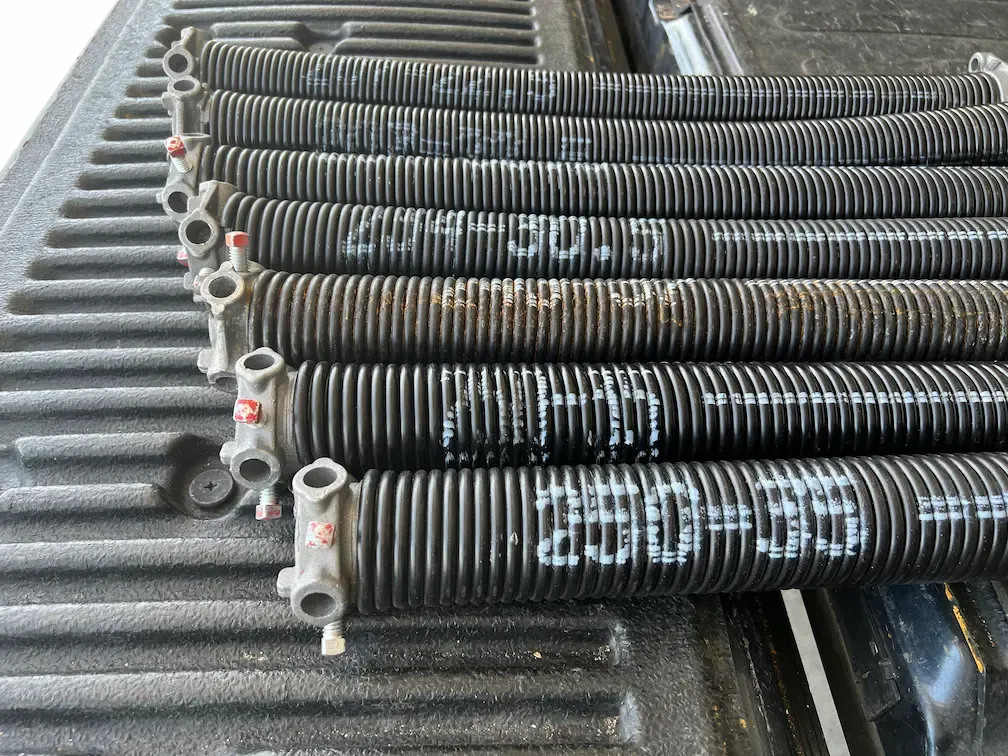
Spring Cycles, and Why Arizona Is Hard on a Standard Spring
What a spring cycle is, why builder springs fail after about seven years in the Valley, and what high cycle springs cost
Read it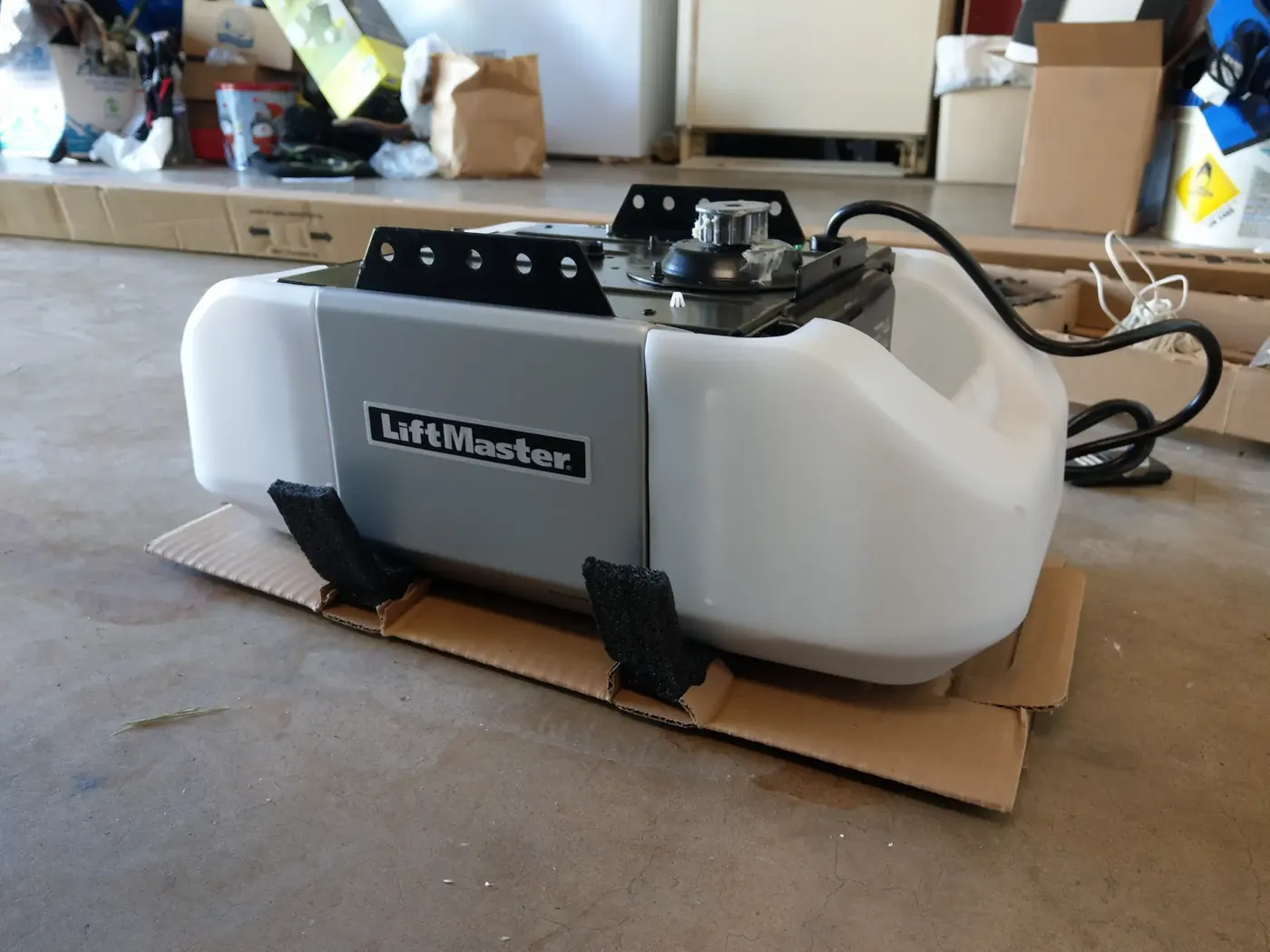
Belt Drive or Chain Drive, and When the Quiet Is Worth Paying For
The real difference between a belt drive and a chain drive garage door opener, what each is good for, and what a fitted
Read it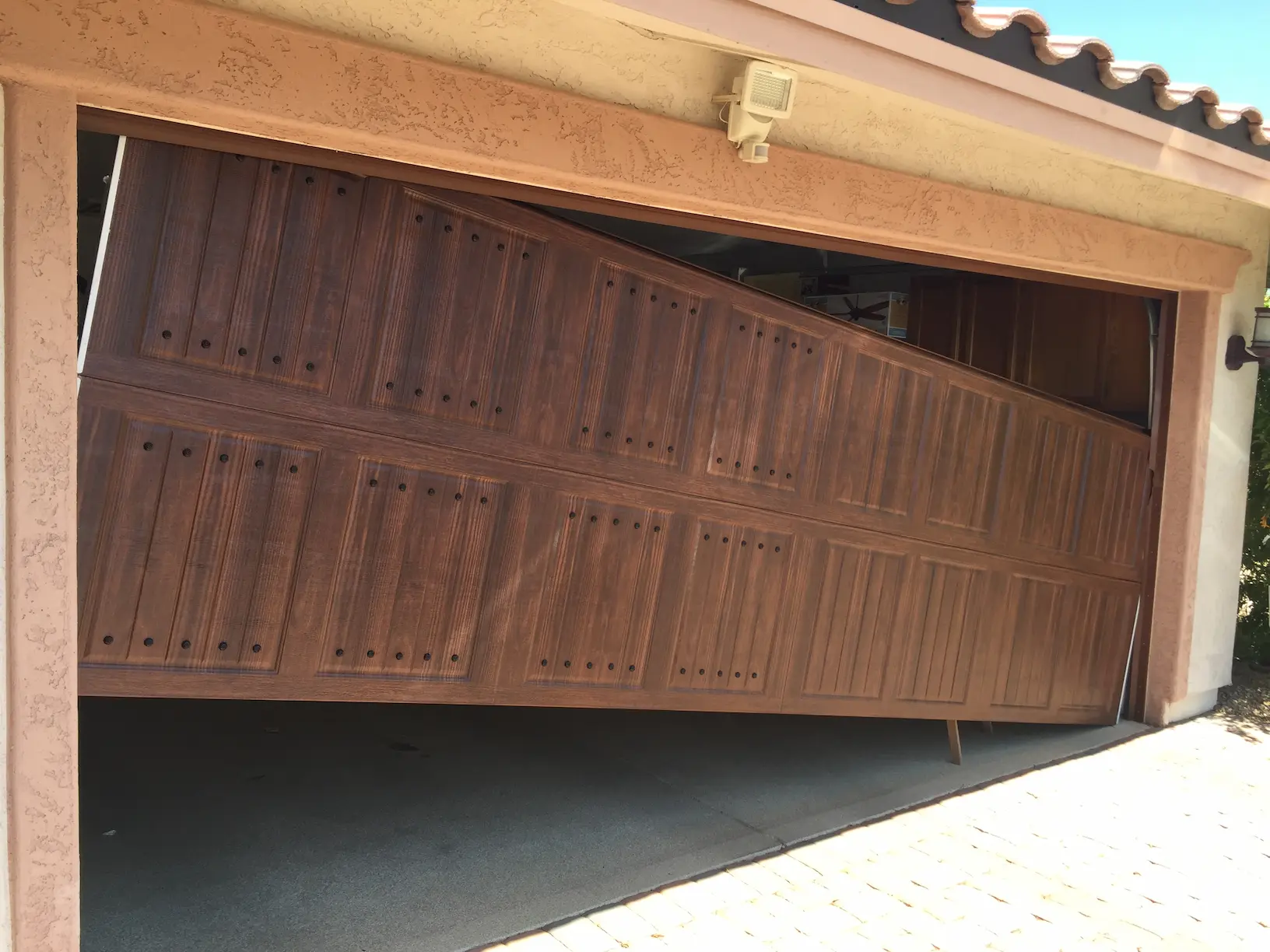
Your Door Is Off Its Track. Read This Before You Touch It
What to do, and what not to do, when a garage door comes off its track. Written by the Scottsdale company that puts them
Read it